


Your shopping cart is empty!

 Home
Home
Infrared Prism
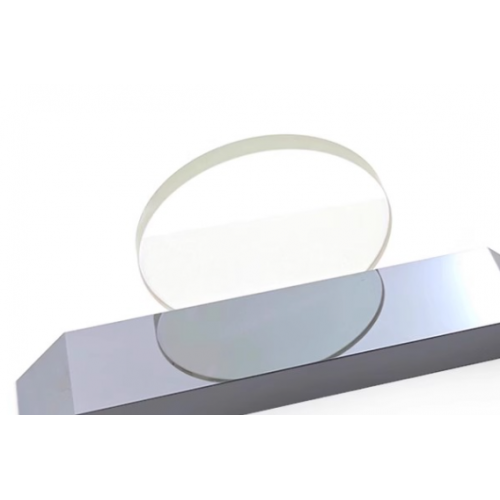
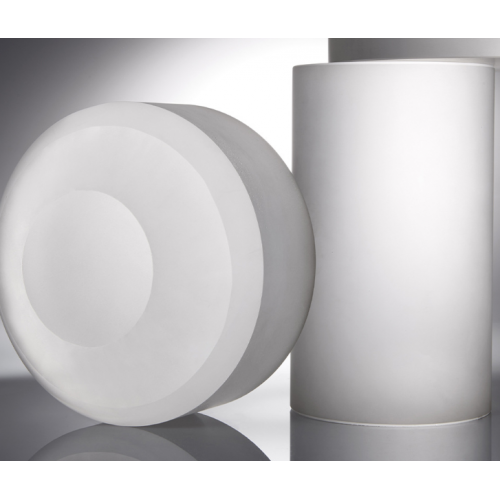
infrared prism is an optical component used in the field of infrared spectroscopy. Its main characteristics are as follows: 1. Function: It separates infrared light of different wavelengths through refraction principles. It is commonly used in infrared spectroscopic analysis, laser systems, and optical measurement, helping researchers analyze the spectral properties of substances or control infrared optical paths. 2. Material: It is typically made from infrared-transmitting materials such as calcium fluoride (CaF₂), germanium (Ge), or zinc selenide (ZnSe). These materials have high transmittance across different infrared bands, adapting to a wide wavelength range from near-infrared to far-infrared. 3. Structure: Common forms include equilateral prisms and right-angle prisms. Equilateral prisms achieve dispersion through three 60° angles, while right-angle prisms are used for optical path redirection (90° deflection). Some prisms can be equipped with anti-reflective coatings or reflective coatings to optimize performance. The infrared prism is a key component in infrared optical systems for achieving functions such as wavelength separation and optical path adjustment, holding significant importance for the application and development of infrared technology.