


Your shopping cart is empty!

 Home
Home
Dispersive Prism
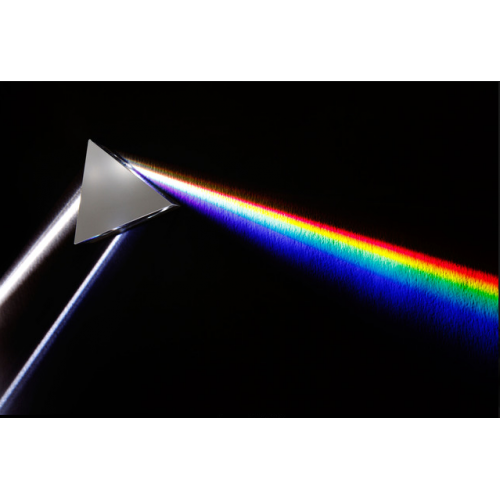
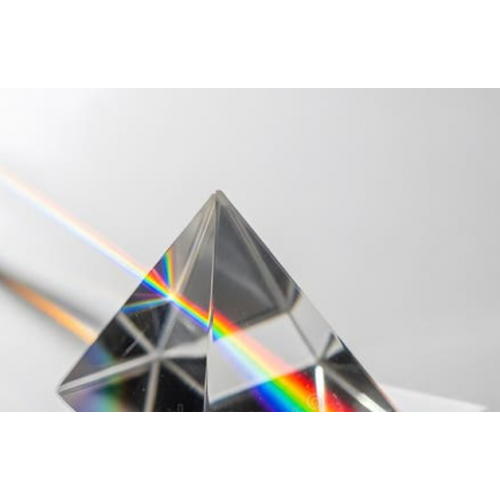
A dispersive prism is an optical component that operates based on the principle of light dispersion. It is typically made of transparent materials such as optical glass or quartz and has a specific geometric shape (e.g., triangular, trapezoidal). When composite light (e.g., white light) enters a dispersive prism, different wavelengths of light experience varying refractive indices within the prism material. This causes them to bend by different degrees as they pass through the prism, thereby decomposing the composite light into monochromatic lights of different colors and forming a spectrum. The dispersive power of a dispersive prism is related to factors such as the refractive index of the prism material, the geometric shape of the prism (e.g., apex angle), and the incident angle. It is commonly used in fields such as spectral analysis, optical measurement, and laser technology, serving as an important tool for studying and applying light dispersion phenomena.