


Your shopping cart is empty!

 Home
Home
Beam Splitter Prism
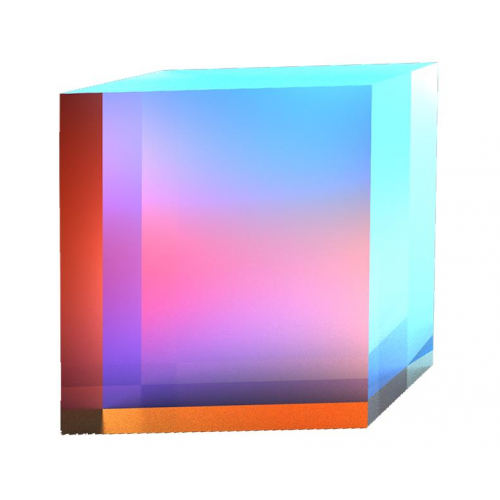

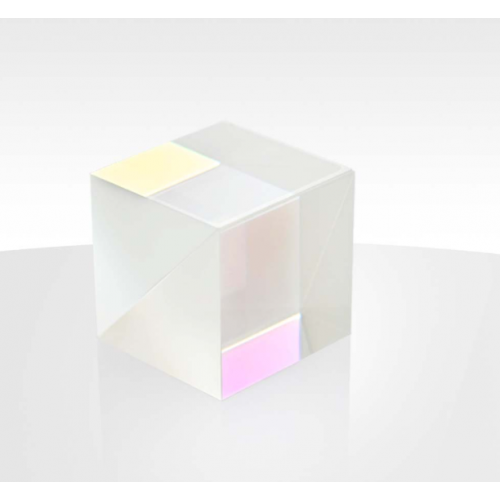
The Beam Splitter Prism (分光棱镜) has the following characteristics: 1. Light Path Splitting Function: It can divide incident light into reflected and transmitted light in a specific ratio (such as 50/50, 70/30, etc.), achieving light path separation. This is suitable for applications such as optical measurement, interferometers, and laser systems. 2. Compact Structure: Typically composed of two right-angle prisms bonded together to form a cube or wedge structure, it occupies minimal space and is easy to integrate into complex optical systems. 3. Optical Path Consistency: The optical paths of the reflected and transmitted light are equal, which is crucial for applications sensitive to optical path differences such as interferometric measurements, helping to reduce phase errors. 4. Polarization Control Capability: Polarizing Beam Splitter Prisms (PBS) can separate beams based on the polarization direction of light, reflecting S-polarized light and transmitting P-polarized light. They are suitable for polarized optics experiments and optical isolators. 5. Wavelength Selectivity: By coating specific films, wavelength division can be achieved. For example, dichroic beam splitter prisms can reflect or transmit light of different wavelengths separately, used in spectral analysis and fluorescence microscopes. 6. High Damage Threshold: Compared to flat beam splitters, the bonded structure of beam splitter prisms better withstands high-power lasers, making them suitable for high-power optical systems. 7. Easy Installation: Cube beam splitter prisms support 0° incidence angle, simplifying installation alignment without requiring complex adjustments.