


Your shopping cart is empty!

 Home
Home
Porro Prism
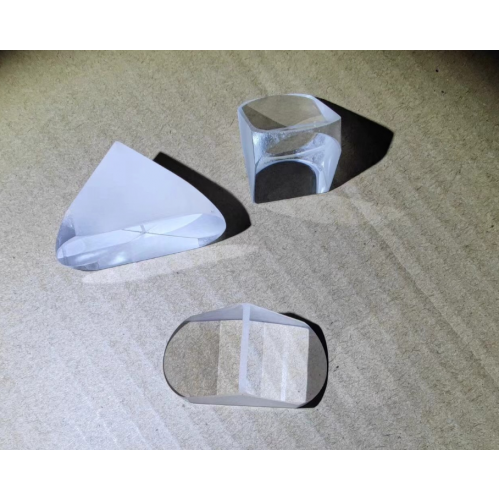

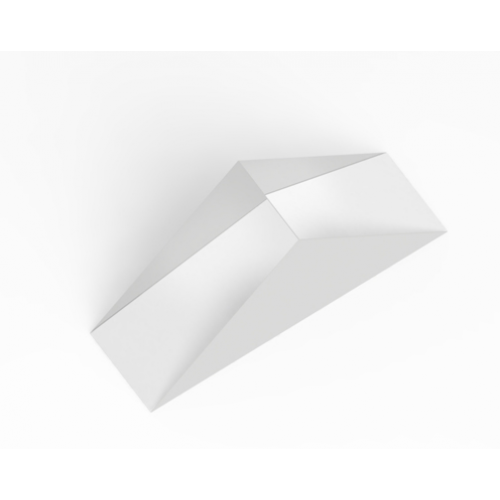
The Porro Prism has the following characteristics: 1. Simple structure: Composed of isosceles right-angle prisms, typically used in pairs to achieve image inversion through two total internal reflections. It has low processing difficulty and cost. 2. Bright imaging: Utilizing the principle of total internal reflection, it does not require reflective coatings, resulting in high light transmittance (up to 90%-95%). This makes imaging clearer in dimly lit environments. 3. Strong three-dimensionality: The distance between the objective lenses is greater than that between the eyepieces, simulating binocular disparity. This gives the observed scene a stronger sense of depth and three-dimensionality, making it suitable for observing distant landscapes, birds, etc. 4. Light path folding: Through 'Z'-shaped light path folding, it effectively shortens the distance between the telescope's objective lens and eyepiece, balancing portability with optical performance. 5. No phase difference: It avoids the common phase difference issues found in roof prisms, resulting in good image contrast and color reproduction. 6. Larger size: Due to its light path design, the overall size and weight of the telescope are relatively larger. Its portability is slightly inferior to that of roof prism telescopes, but it is suitable for users who prioritize image quality and are less concerned about size.